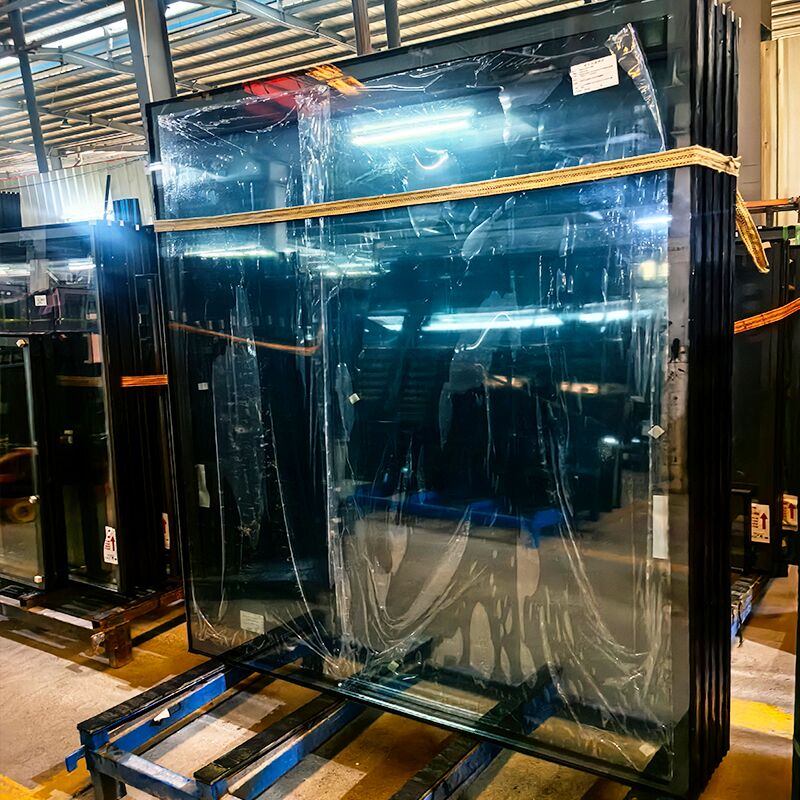
Detalles del producto
Lugar de origen: Cantón, China
Nombre de la marca: OEM
Certificación: SGCC, SAI,CE
Número de modelo: OEM
Condiciones de pago y envío
Cantidad de orden mínima: 10 metros cuadrados
Precio: Negotiate
Detalles de empaquetado: Cajón fuerte de la madera contrachapada
Tiempo de entrega: 10-20 días
Condiciones de pago: T/T
Capacidad de la fuente: 100000 metros de /Square por mes
Tamaño: |
Personalizable |
Espesor: |
4 mm+12A+4mm o 5 mm+9A+5m, etc. |
Forma: |
Departamento |
Técnica: |
Vidrio laminado |
OEM/ODM: |
Sí |
Estructura: |
Hueco |
Original: |
Foshan, China |
Solicitud: |
Muro de cortina, ventanas |
Tamaño: |
Personalizable |
Espesor: |
4 mm+12A+4mm o 5 mm+9A+5m, etc. |
Forma: |
Departamento |
Técnica: |
Vidrio laminado |
OEM/ODM: |
Sí |
Estructura: |
Hueco |
Original: |
Foshan, China |
Solicitud: |
Muro de cortina, ventanas |
Estructura del Vidrio Aislante y Método de Puesta en Marcha de la Línea de Producción
El vidrio es un material básico indispensable en la vida diaria. Desde artículos de uso diario como vasos y ventanas de vidrio hasta materiales decorativos arquitectónicos como muros cortina de vidrio, ha realizado enormes contribuciones al desarrollo de la civilización mundial. En el campo del procesamiento de vidrio, equipos como las cortadoras automáticas de vidrio se utilizan ampliamente por su excelente rendimiento. A continuación, presentaremos brevemente la estructura del . En la producción real, es necesario seguir estrictamente los puntos de diseño estructural y las especificaciones de puesta en marcha anteriores, combinarlos con las características del equipo y los requisitos del producto, y optimizar el proceso de producción para producir continuamente productos dey explicaremos el método de puesta en marcha de la línea de producción depuede ser de 3 mm, 4 mm, 5 mm, 6 mm, 8 mm, 10 mm, 12 mm, etc., y el grosor de la capa de aire puede ser de 6 mm, 9 mm, 12 mm. La conductividad térmica del vidrio es 27 veces la del aire; siempre que el .
I. Estructura Central del Vidrio Aislante
Elvidrio aislante
ordinario, el vidrio aislante de alto rendimiento se recubre con una película metálica especial con un excelente rendimiento térmico en el lado del vidrio exterior que da a la capa de aire intermedia, además de rellenar el espacio entre las dos capas de vidrio con aire seco. Puede bloquear una cantidad considerable de energía solar que entra en la habitación, logrando un mejor efecto de aislamiento térmico.
II. Método de Puesta en Marcha de la Línea de Producción de Vidrio Aislante . En la producción real, es necesario seguir estrictamente los puntos de diseño estructural y las especificaciones de puesta en marcha anteriores, combinarlos con las características del equipo y los requisitos del producto, y optimizar el proceso de producción para producir continuamente productos de vidrio aislante
afecta directamente el rendimiento de sellado, la precisión dimensional y la vida útil de los productos. El proceso de puesta en marcha debe seguir estrictamente las especificaciones de operación para garantizar que cada enlace cumpla con los estándares. Los pasos específicos de puesta en marcha son los siguientes:
1. Preparación de las Condiciones del Sitio . En la producción real, es necesario seguir estrictamente los puntos de diseño estructural y las especificaciones de puesta en marcha anteriores, combinarlos con las características del equipo y los requisitos del producto, y optimizar el proceso de producción para producir continuamente productos devidrio aislante
y equipos de puertas y ventanas utilizan una fuente de alimentación de 380 V para mantener la estabilidad del funcionamiento del equipo. Una fuente de agua del grifo limpia y un drenaje sin obstáculos son garantías para el buen funcionamiento de la máquina de limpieza.
2. Colocación Correcta del Equipo
Coloque el marco de la sección de alimentación, el marco de la sección de limpieza, el marco de la sección de secado, el marco de la sección de descarga, el gabinete de control y el gabinete de ventilación en el orden correcto. Una colocación incorrecta no solo reducirá la eficiencia del trabajo, sino que también conducirá a una calidad de producto no calificada.
3. Ajuste de Nivelación
Ajuste los soportes para nivelar toda la máquina, con una tolerancia de 1,5 mm horizontalmente y 3 mm verticalmente (solo se permite que la sección de alimentación sea más alta que la sección de descarga).
4. Conexión y Fijación del Marco
Una vez que la nivelación longitudinal de toda la máquina cumpla con los requisitos, conecte y fije las cuatro secciones del marco (se proporcionan pares de pernos de conexión en el marco).
5. Tratamiento de Sellado de Juntas
Aplique pegamento de vidrio en las juntas entre el marco de la sección de alimentación y el marco de la sección de limpieza, y entre el marco de la sección de limpieza y el marco de la sección de secado para evitar fugas de agua en estas dos posiciones.
6. Conexión del Sistema de Transmisión
Conecte cada sistema de transmisión de acuerdo con las normas pertinentes.
7. Limpieza y Llenado del Tanque de Agua
Limpie a fondo el tanque de agua antes de llenarlo con agua.
8. Inspección de Operación de PruebaDespués de la instalación y el ajuste, realice una operación de prueba de acuerdo con la secuencia de operación especificada en este manual. Durante la operación de prueba, observe completamente el estado de funcionamiento del equipo e inspeccione las muestras devidrio aislante
producidas para garantizar que el equipo funcione de manera estable y que la calidad del producto cumpla con los estándares.. En la producción real, es necesario seguir estrictamente los puntos de diseño estructural y las especificaciones de puesta en marcha anteriores, combinarlos con las características del equipo y los requisitos del producto, y optimizar el proceso de producción para producir continuamente productos devidrio aislante. En la producción real, es necesario seguir estrictamente los puntos de diseño estructural y las especificaciones de puesta en marcha anteriores, combinarlos con las características del equipo y los requisitos del producto, y optimizar el proceso de producción para producir continuamente productos devidrio aislante . En la producción real, es necesario seguir estrictamente los puntos de diseño estructural y las especificaciones de puesta en marcha anteriores, combinarlos con las características del equipo y los requisitos del producto, y optimizar el proceso de producción para producir continuamente productos de vidrio aislante